
Comparisons
How Medblocks compares to other healthcare integration tools, and where we differ.
Healthcare integration is not new. Interface engines and connectivity vendors have been moving data between systems for decades, mostly through custom HL7v2 feeds and point-to-point interfaces built one site at a time. What is new is the standardized, regulated APIs that now expose the same data directly. A wave of vendors has grown up to use them, and the old incumbents are racing to adopt them too.
Medblocks is built natively on these APIs, and we don’t broker access. You hold the direct relationships, on your own credentials, so what you build keeps growing with you rather than locking you in. Read our approach for how it works.
Here is the landscape of vendors you might be comparing us with:
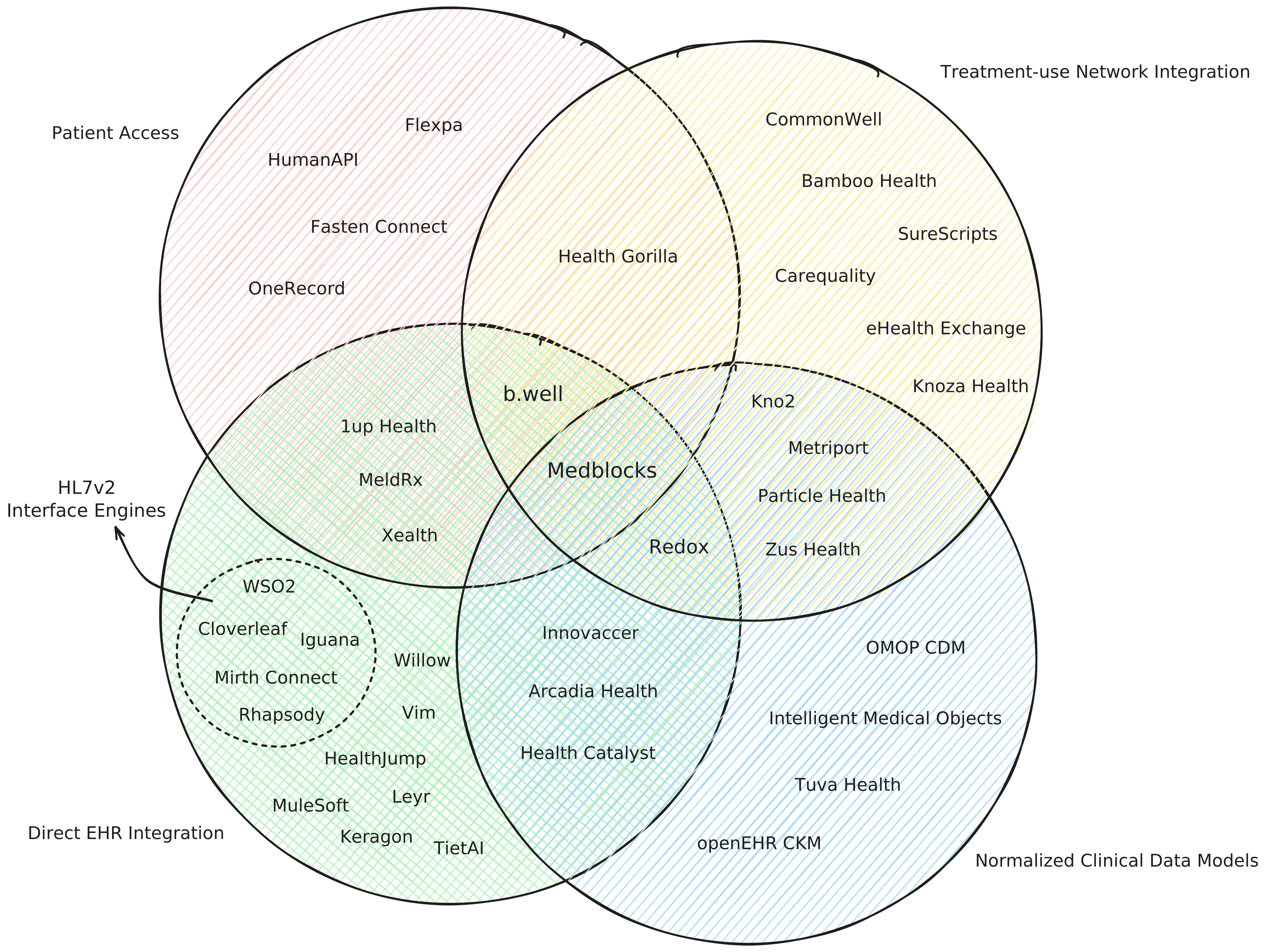
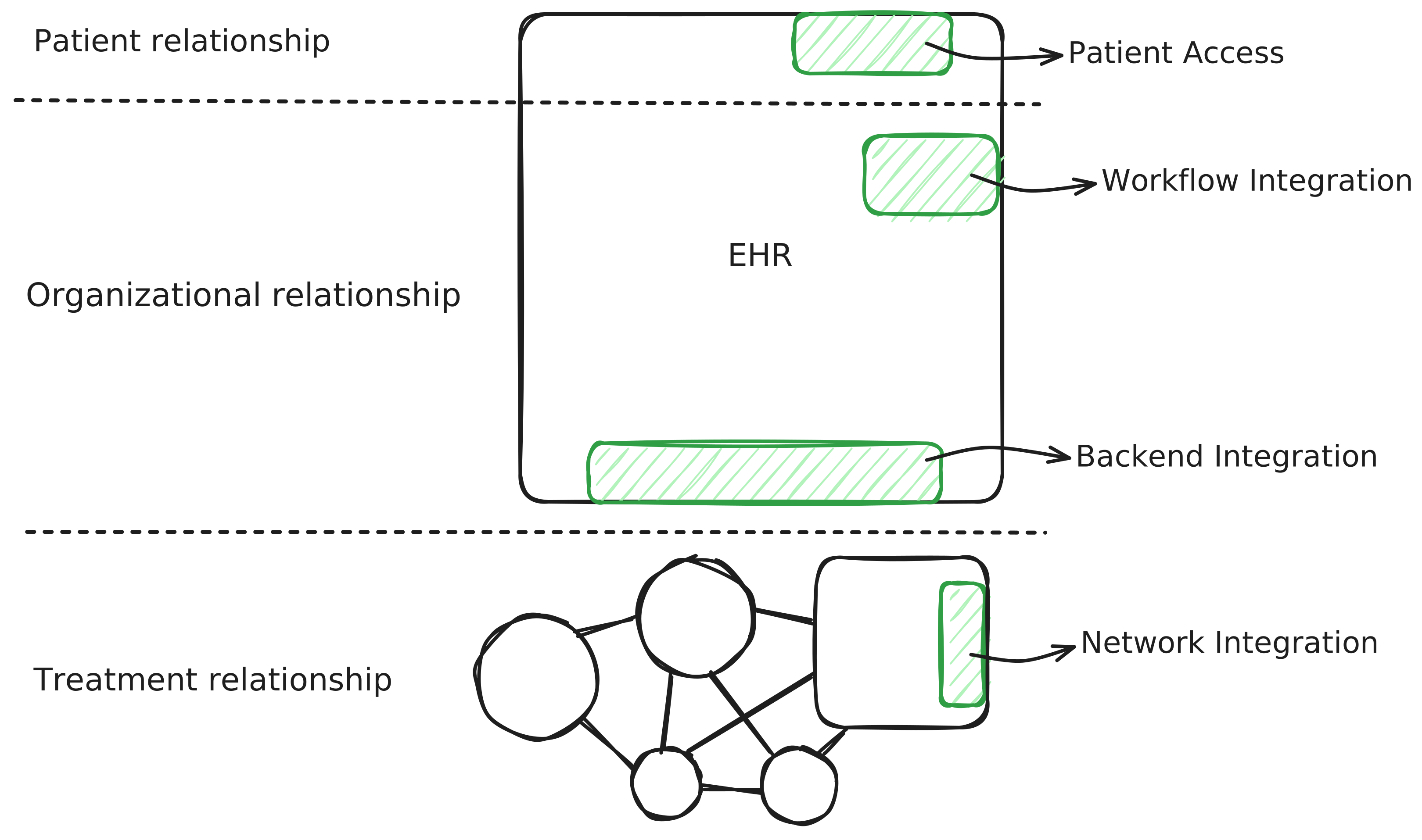
The three main circles are the integration surfaces. Which one you can actually reach depends on the relationship you hold, as we cover in pick the integrations that fit you: a patient relationship unlocks patient access, an organizational one unlocks direct EHR integration across clinician workflows and backend, and a treatment relationship unlocks treatment-use HIE. We group the comparison the same way.
The fourth circle is the data layer. After records arrive, we deduplicate them into one record per person and normalize every source into clinically vetted models, which we cover under clinical safety.
Capability comparison
Coverage of each surface and the data layer, by vendor. Select a column for a full comparison, or see capability definitions for what each row means.
| Medblocks | Redox | b.well | Flexpa | Health Gorilla | Particle Health | Rhapsody | Medplum | Tuva Health | Innovaccer | |
|---|---|---|---|---|---|---|---|---|---|---|
| Patient access ? | ✓ | ✗ | ✓ | ✓ | ~1 | ✗ | ✗ | ✗ | ✗ | ✗ |
| Your branding ? | ✓ | ✗ | ✗ | ✗ | ✗ | ✗ | ✗ | ✗ | ✗ | ✗ |
| Brokered org access ? | ✗2 | ✓3 | ✓ | ✓ | ✓ | ✓ | ✗ | ✗ | ✗ | ✓ |
| Wearable & mobile ? | ✓ | ✗ | ✓ | ✗ | ✗ | ✗ | ✗ | ✗ | ✗ | ✗ |
| SMART EHR embed ? | ✓ | ✓ | ✗ | ✗ | ✗ | ✗ | ✗ | ~4 | ✗ | ~5 |
| CDS Hooks ? | ✓ | ✓ | ✗ | ✗ | ✗ | ✗ | ✗ | ~4 | ✗ | ~5 |
| EHR backend ? | ✓ | ✓ | ✓ | ✗ | ✗ | ✗ | ✓ | ~4 | ✗ | ✓ |
| FHIR bulk ? | ✓ | ✓ | ✗ | ✗ | ✗ | ✗ | ✓ | ~4 | ✗ | ✓ |
| HL7v2 interfacing ? | ~6 | ✓ | ✗ | ✗ | ~7 | ✗ | ✓ | ~4 | ✗ | ✓ |
| Treatment-use HIE ? | ✓ | ~8 | ✓ | ✗ | ✓ | ✓ | ✗ | ✗ | ✗ | ✗ |
| Patient deduplication ? | ✓ | ✓ | ✓ | ✓ | ✓ | ✓ | ✗ | ~9 | ✓10 | ✓ |
| Clinical data models ? | ✓ | ✓ | ✓ | ~11 | ✗ | ✓ | ✗ | ~12 | ✓ | ✓ |
| Export to FHIR CDR ? | ✓ | ✓ | ~13 | ~13 | ✗ | ✗ | ~14 | ✓ | ✗ | ✗ |
| Export to warehouse ? | ✓ | ✗ | ✓ | ✗ | ✗ | ✗ | ✗ | ✓ | ✓ | ✓15 |
| Pricing model ? | Flat subscription | Per connection | Per patient | Flat subscription | Per query | Per query | Per interface | OSS / Subscription | OSS / Per metric | Per patient |
| Pricing ? | $60,000/year | starts at $600,000/year† | starts at $160,000/year† | starts at $350,000/year16 | Undisclosed | starts at $60,000/year17 | starts at $50,000/year18 | $72,000/year19 | starts at $10,000/metric† | $350,000/year20 |
✓ native · ~ partial · ✗ not supported
- Health Gorilla patient access: TEFCA Individual Access Services only, with data quality still poor today. Even after identity proofing through ID.me or CLEAR, patients with records in major EHRs like Epic must sign in to the EHR directly anyway.
- Medblocks brokered access: we provide extensive written guidance and one-to-one support on contracting with an organization and getting your own credentials installed. We don't do it on your behalf with our credentials.
- Redox brokered access: Redox can broker new organization connections, a months-long setup you pay for. The connection is then shared across Redox customers, not exclusive to you, and you lose access if you leave.
- Medplum integrations: the capabilities marked limited are achievable by building custom integration and mapping with their Bots feature, but take significant glue code, technically similar to Rhapsody. See their integration docs.
- Embedding (Innovaccer, Arcadia): limited to the platform's own pre-built applications, not your custom SMART app or CDS Hooks cards.
- Medblocks HL7v2 interfacing: supported over HTTP with SMART Backend authentication, which major EHRs like Epic support natively.
- Health Gorilla HL7v2 interfacing: limited to ADT and lab-result feeds from hospitals and labs already in its network. You cannot connect a new feed to a source of your choosing.
- Redox treatment-use HIE: network access exchanges C-CDA documents (patient and visit summaries), not discrete FHIR. Redox's translated JSON includes only the required C-CDA sections; optional data stays in the raw XML.
- Medplum patient deduplication: a framework and reference implementation, not a turnkey EMPI. You design the matching rules and merge workflow yourself and build it with custom code.
- Tuva patient deduplication: handled by Tuva EMPI, a separate product you set up and pay for on its own, with its own implementation effort and possible subscription cost.
- Flexpa clinical data models: you model it yourself with SQL on FHIR. Its ViewDefinitions are more limited than a tool like dbt: one table maps from one resource, while many clinical concepts span several (tumor size can be an Observation or a Condition).
- Clinical data models (Medplum, Aidbox): available through SQL on FHIR, which you define and maintain yourself, not provided out of the box.
- Export to FHIR CDR (b.well, Flexpa, Fasten Connect, Metriport): they expose FHIR APIs to read the data, but you build the pipeline to push it into your own FHIR server.
- Export to FHIR CDR (interface engines): engines route messages and keep no longitudinal patient record, with no native FHIR conversion, so reaching a FHIR CDR takes heavy custom mapping.
- Innovaccer export to warehouse: you get direct access to their warehouse and set up exports from there. Not a native export feature.
- Flexpa pricing: based on the Omni plan, which includes unlimited data retrievals and access to all connections.
- Particle Health pricing: the $1-per-query rate is publicly documented. The roughly $60,000/year usage minimum is an estimate from multiple public sources and industry interviews.
- Rhapsody pricing: based on the AWS Marketplace listing for Rhapsody as a Service.
- Medplum pricing: only the $6,000/month Premium plan includes any integrations, so that is the figure shown here.
- Innovaccer pricing: based on the AWS Marketplace listing, the data activation platform ($600k) plus a care management add-on ($450k) over 36 months, about $350,000/year.
† Approximate estimate based on multiple sources and industry interviews. Not publicly disclosed by the vendor.
Where Medblocks fits
Most of these tools do one thing well. The catch is who they were built for: most were built for provider organizations and an earlier era of integration, not for a healthcare tech company shipping a product. Many also bundle the access to each organization into the deal, brokering the connection on their own credentials.
Medblocks is built for builders. We use modern, standardized APIs, run roughly 10 - 12x more affordable than a bundled integration, and never broker access for you. You connect on your own credentials and keep the direct relationships, so you are never locked in.
Each category below is represented by a single comparison.
vs Redox
vs Flexpa
vs Health Gorilla
vs Rhapsody
vs Medplum
vs Tuva Health
If you are ready to build, the Quickstart takes you from your first connection to your first patient record in minutes.
Not sure if this fits you?
Tell us what you're building and we'll show you exactly what you can integrate.
Capability definitions
Patient access
A patient connects their own records through a consented API.
Your branding
The patient session runs under your brand, not the vendor’s, so you don’t hand users to someone else’s logo.
Brokered org access
The vendor negotiates and maintains access to each organization on your behalf.
Wearable and mobile
Patient-authorized device and app data, like Apple Health, wearables, and glucose monitors, through ready-made SDKs.
SMART EHR embed
Your app launches inside the EHR through SMART App Launch, scoped to the patient on screen.
CDS Hooks
Your guidance surfaces as a native card inside the EHR at the right moment in the clinician’s workflow, like opening a chart or placing an order.
EHR backend
Server-to-server access that runs unattended, with no patient or clinician logged in.
FHIR bulk
Importing a whole patient population from a source’s FHIR Bulk Data endpoint in a single job. This measures pulling bulk data in, not exposing a bulk endpoint of your own.
HL7v2 interfacing
Sending and receiving legacy HL7v2 messages, still the backbone of most hospital interfaces.
Treatment-use HIE
Reaching a patient’s records across organizations through the national networks, which require a treatment relationship.
Patient deduplication
Matching and linking records that belong to the same patient across sources, so one person stays one record.
Clinical data models
Normalizing every source into tabular, queryable models, so the same concept always looks the same.
Export to FHIR CDR
Delivering the normalized record into a FHIR server you control.
Export to warehouse
Delivering into your own data warehouse, like Snowflake, Fabric, Databricks or BigQuery, for analytics.
Pricing model
The commercial shape, from published self-serve pricing to quote-based enterprise sales.
How is this guide?