Clinical Scenario: Encounter Synopsis
At this point in the consultation, we’ve captured a lot of information about an encounter. We have structured data across multiple archetypes: history, vitals, clinician judgement and instructions.
However, in clinical practice, doctors often want one more thing: a concise summary that brings everything together.
Summarizing the encounter
Even when we capture data in a highly structured way, it is still common for clinicians to write a narrative overview. This serves two purposes:
- it allows another practitioner to quickly understand what happened
- it preserves the clinician’s interpretation and emphasis, which may not be fully expressed through structured fields alone
Adding a clinical synopsis
On searching the CKM, you can find a suitable EVALUATION archetype: clinical_synopsis.v1
Build your first real FHIR app in 15 days
500+ builders have done it. Live kick-off, structured modules, Demo Day. $27.
Join the challengeThe purpose of this archetype is to record a narrative summary of the patient from the perspective of a healthcare provider, including interpretation and clinical context. This aligns perfectly with what we want to capture.
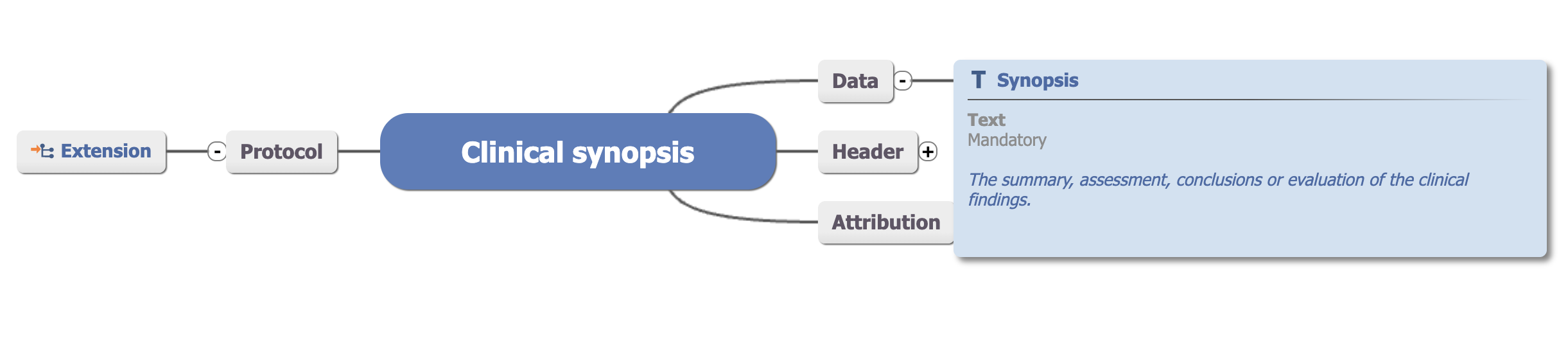
- a free-text synopsis This allows the clinician to summarize the encounter in their own words.
In practice, clinicians often read the narrative first, and the structured data supports decision-making and analytics. Both are needed for a complete clinical record.
Lesson summary
With this, the initial assessment workflow is complete.
Across these lessons, we’ve seen how to:
- choose the right archetypes based on clinical intent
- distinguish between the different classes of archetypes
- combine structured and unstructured data
- and build a realistic, end-to-end encounter template
At this point, you should be comfortable taking a real-world clinical form and translating it into an openEHR template step by step.
In the next lesson, you’ll do an exercise related to this scenario.